Accelerating Digital Transformation with Modern Integration Strategies: APIs, Microservices, and Beyond

We all talked about how the future will have everything from flying cars to AI-enabled homes, smart devices, and businesses. Well, the flying cars are still in beta phase, but everything else is here. The most prevailing of which is the digital transformation of businesses and organizations.

It is no longer a distant thought but a reality, and the entire world is hopping on this, so what are you doing to stay on top of everyone else? With everyone having access to the best of services, the difference comes from how you implement that service and get the desired results. This is where the modern integration strategies come into play; these are backed by APIs and microservices.

They also use a lot of AI-enabled architectural patterns; this is the new face of digital transformation.

The Integration Imperative: Why Traditional Approaches Fall Short

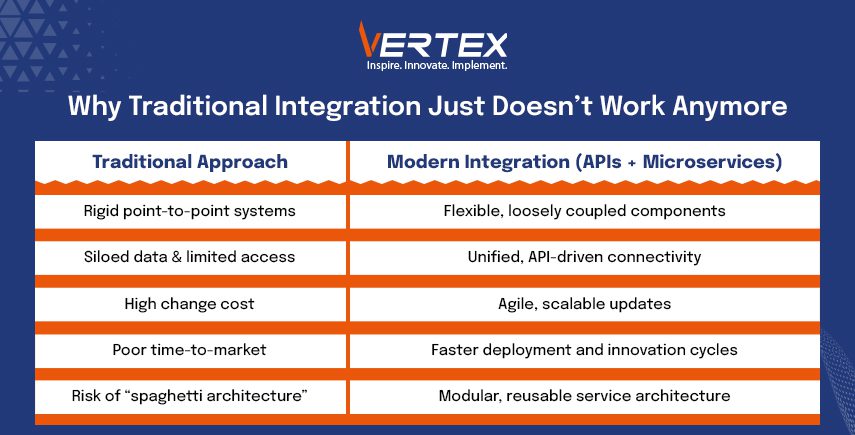
The traditional integration methods are functional, no doubt, but they rely on outdated methods and technologies. They use point-to-point connections, which are rigid, slow, and prone to “spaghetti architecture.” When any business integrates an array of cloud services or SaaS applications, this rigidity will hamper the integration and result in issues. We have discussed some of these issues below for better understanding.

  • Siloed Data: Most of the time, a lot of information gets trapped in different systems, preventing a complete view of the customers, operations, and performance.
  • Slow Innovation: If we make changes in a coupled system arrangement, then the probability of ripple effects skyrockets. Making rapid deployment nearly impossible.
  • High Costs: If we have to do complex and custom changes and integrations, then that will cost more and deplete resources.
  • Lack of Agility: Businesses are slow to respond to new trends, and they are rigid in their methods. Customer demands change with time, and if the business is not flexible with them, then it can face a lot of queries from customers.

According to a report done by Veritas, the digital transformation market is set to experience substantial growth, with a projected CAGR of 22% between 2021 and 2025, reaching a market value of USD 3.7 trillion. This report is a wake-up call on the urgency of the situation and the need of impactful integration strategies, so that businesses can capture the market with the full potential of digitalization.
APIs: The Foundation of Modern Connectivity

APIs or Application Programming Interfaces are the reason why modern software can interact with each other without diving into the internal complexities. APIs are standard contracts between these software, which make sure that there is no peeking behind the curtain and no unethical data leaks. APIs are more than technical enablers; they are responsible for creating an ecosystem of digital software. This generates a lot of revenue, according to a coverage done by PR News, the API management market is projected to expand from $4.5 billion in 2022 to $13.7 billion by 2027, growing at a compound annual growth rate (CAGR) of 25.1%.

How APIs Accelerate Digital Transformation:

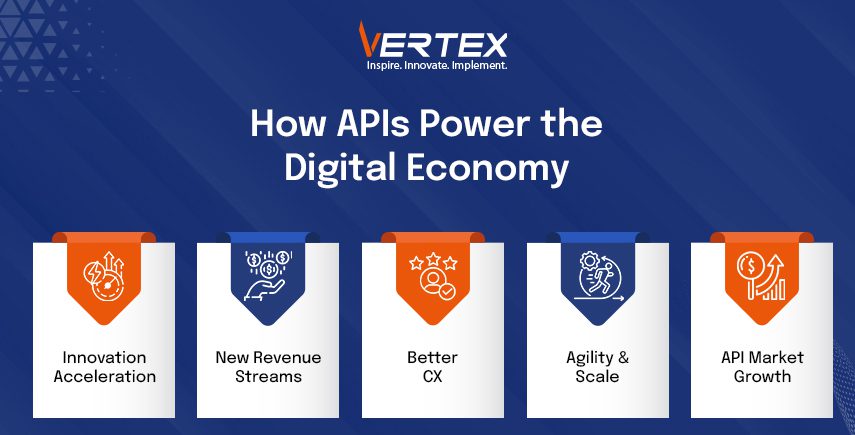
APIs are the catalyst that is accelerating Digital transformation, and we have discussed some ways in which APIs are pushing for the growth of Digital Transformation.

  • Innovation Acceleration: APIs can help by exposing functionalities, which in turn can help teams, partners, and developers build applications. This promotes a culture of collaboration and creation. Companies like Google and Amazon offer API services, such as Google Maps APIs, so that developers can use them to build a large ecosystem of apps.
  • New Revenue Streams: With the help of API services, companies have been able to develop an entirely new source of income. As they allow businesses to monetize their own data and services by offering APIs. For example, OpenAI also offers API access and earns a “API Economy,” which allows businesses to monetize their data and services by offering API access.
  • Enhanced Customer Experience: APIs have helped develop some of the best personalized customer experiences. The best example is banking apps, which use Banking APIs and then connect banks with payment portals and merchants, enabling one of the top-notch financial data and payment exchanges.
  • Agility and Scalability: APIs provide a lot of agility and independence, they promote loose coupling, which entails that changes to one service will not affect any other services. This also , makes the development and deployment of services and apps much faster.
Microservices: Deconstructing the Monolith for Greater Agility

Microservices is the reason why businesses are able to create and deploy their services much faster using APIs. Microservices break down the monolithic application into small, independent, and loosely coupled services. Each of these coupled services generally takes care of one business capability and communicates with other services using APIs. This also allows for more innovation in a limited time.

Benefits of Microservices for Digital Transformation:

  • Independent Development and Deployment: One of the perks of microservices is that teams are capable of developing, testing, and deploying their own microservices. This reduces dependencies and expedites the entire process.
  • Scalability and Resilience: This particular trait of microservices is my favorite. if there is any issues with a single microservice then, it will not harm other microservices in any way and will not affect the workflow as well.
  • Technology Heterogeneity: Microservices allow the flexibility to use different programming languages, databases, and technologies for each service, rather than being confined to a single tech stack.
  • Improved Fault Isolation: As discussed earlier, the loosely coupled nature of microservices safeguards them from errors or failures.
  • Easier Maintenance: Smaller codebases are much easier to understand and maintain. Furthermore, they are also easier to debug and decode, and help in reducing technical debt. Some of the famous companies that use microservices are Netflix and Amazon. They leverage microservices to deliver innovation and the best customer experience.

Beyond APIs and Microservices: Advanced Integration Strategies

Adding advanced integration strategies helps by boosting the entire framework and add another layer of technological edge to the entire system.

Event-Driven Architecture (EDA): Real-time Responsiveness

Real-time insights are crucial, and they are the one factor that creates differences in terms of profit. Reacting to trends and market shifts, real-time is what gives any business its edge. Event-Driven Architecture, or EDA, is an integration pattern in which systems communicate by publishing, capturing, processing, and reacting to events.

Advantages of EDA in Digital Transformation:

  • EDA makes real-time processing of data possible, along with real-time analytics, faster decision making, and even lets you automate responses for critical scenarios.
  • EDA also promotes loose coupling, in fact it kicks it up a notch and allows services to scale independently and respond to demand spikes if any.
  • There are audit logs of events, in case there are errors, and there is also a secondary recovery mechanism.
  • EDA can be integrated with legacy systems, microservices, and external cloud services, and it does that irrespective of their underlying technologies.

Low-Code/No-Code Integration Platforms: Democratizing Connectivity

Since the demand for digital solutions is through the roof, and there are not that many skilled technical experts. Use  Low-code/no-code (LCNC), these integration platforms provide a drag-and-drop interface that enables non-technical workers and business users to build integrations and applications with minimal or no coding at all. This is also proven true by the increased demand for the LCNC in the market.  According to a report done by Proficient Market Insights, the global Low-code and No-code Platform Market is poised for significant growth, projected to reach USD 256.45 billion by 2033, with a CAGR of 25.9% from 2025 to 2033.

Impact of LCNC on Digital Transformation:

  • LCNC platforms cut down on the time and effort usually required to build integrations and applications.
  • They enable normal businessmen and non-technical workers to build integrations and applications with ease.
  • LCNC makes the work of the IT department easier with their drag-and-drop interface, so even business users can handle simple integration tasks.
  • Businesses can quickly adapt to the changing requirements by making prototypes and deploying those integrations.

The Road Ahead: Best Practices for Successful Integration

Digital transformation is a multi-step process, and when we mix microservices and APIs along with technical integrations, the entire process becomes more complex. We have discussed some of the best strategies businesses can use to benefit.

  • Develop a Comprehensive API Strategy: Go with an API strategy that encompasses public, private, and partner APIs, along with proper documentation.
  • Embrace a Product-Centric Approach to Microservices: Microservices should be used and treated like a product of their own and should have their own team, ownership, and boundaries.
  • Invest in Robust Integration Platforms: You can use Integration Platform as a Service (iPaaS) solutions or other enterprise integration platforms that offer capabilities for API management.
  • Prioritize Security from the Outset: Ensure you implement a zero-trust architecture, as more integration points introduce more potential vulnerabilities. Additionally, continuously monitor to safeguard data and integration touchpoints.
  • Foster a Culture of Collaboration: Take down the boundaries of teams, operations, and businesses. Both DevOps and GitOps are crucial for a streamlined development and deployment cycle.

Conclusion

Digital transformation with modern integration techniques is a great way to streamline your business, offer new services to customers, and generate new revenue streams. In this article, we learned that not only can digital tools help a business grow, but without a dedicated framework consisting of Microservices and APIs, the end goal is tough to reach.

Furthermore, the use of advanced tools like EDA and AI/ML will enable your business to get cutting-edge technology and move beyond digitalization, and transform into a dynamic digital landscape.

So if you wish to incorporate all this digital arsenal into your business and do not know where to start, then connect with experts at VertexCS and we will help you transform
Is Your Business Ready for Ransomware’s Data Extortion Tactics? A Deep Dive into the Evolving Threat

Ransomware has evolved into a serious business threat that can break any business. It has transcended from being an IT issue. Ransomware was limited to encryption in exchange for ransom in the starting days, but now it has grown into a web of extortion-based activities.

Data theft and harm to the public image of the company are its two most powerful prongs. In 2024, the number of ransomware attacks skyrocketed, and not only big, well-established businesses were targeted, but small businesses were also targeted equally. The threat is credible, and your business can also fall prey to ransomware. Now, the question to ask yourself is whether or not your business is ready to face a ransomware attack. Also, can it handle all the data extortion tactics these criminals use?

The answer to this question for many of you reading will be ‘No’. Even after so much credible news, threats, and well-publicized incidents, companies just underestimate the level of threat these ransomware attacks pose to their business.

The Alarming Landscape: Ransomware in 2024

The statistics are very clear when it comes to the volume, costs, and evolution of ransomware attacks over time.

  • Frequency: According to Shohos 2023, 66% of organizations were hit by ransomware in the last year. In this, 13% were small and medium businesses. This proves that they not only target high-profile entities.
  • Escalating Costs: The financial loss from the attack not only means ransom but also includes recovery costs, operational downtime, reputational damage, and potential regulatory fines.
    • According to PurpleSec, the average cost of a ransomware attack in 2024 was a staggering $5.13 million.
    • The average cost to recover from a ransomware attack is close to $2 million, and the average downtime a company experiences after an attack is 24 days, according to Statista.
  • Soaring Demands and Payments: According to a report from PurpleSec, the average ransom demand in 2024 has reached $5.2 million, reflecting a significant increase in both monetary value and sophistication.
  • The average ransom payment in 2024 was $417,410, which is 1343% greater than in 2018, according to a report from PurpleSec.

Some of the companies, such as CDK Global, paid $25 million in June 2024 for ransom, and Change Healthcare paid $22 million in March 2024. This shows the absurd amounts of money companies pay as ransom.

  • Industry Impact: These attacks affect all industries. In 2024, healthcare. Government and education accounted for 47% of all the disclosed ransomware news headlines, showing that no sector is shielded. This was covered in a study by BlackFog.

Now, the numbers do not lie; they show the dire state of our businesses and how much damage they are facing because of these ransomware attacks.

The Evolution: Beyond Encryption to Data Extortion

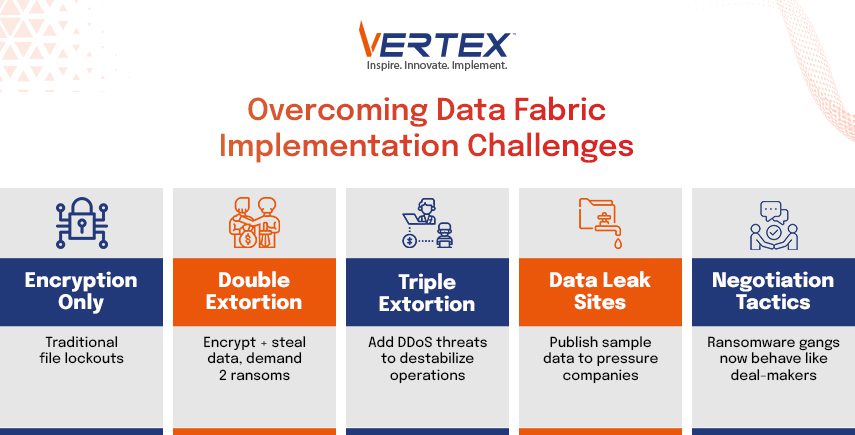
Nowadays, you do not just pay ransom to prevent encryption; you are made to pay multiple extortions. You are not only required to pay them but also to comply with their demands and act accordingly. The following are some common new ransom tactics.

  • Double Extortion: This was first recorded in 2020, in which the extortionist would make a copy of your data before encrypting it. This gives him a second leverage, and you will have to pay the ransom twice, first for decrypting the files. The second ransom you pay is to prevent the data from being sold on the internet or the dark web.
  • Triple Extortion: In triple extortion, an extra step is added, and this step is threatening to launch a DDoS attack, also known as Distributed Denial of Service. This attack will disrupt the company’s entire supply chain and customer and partner database.
  • Data Leak Sites (DLS): A lot of these extortionists operate dark websites where they release a chunk of your stolen data, as proof of breach. This not only worries the company but also exerts pressure and the fear of public humiliation. This eliminates the probability of the organization emerging unscathed from the situation, as some of the secrets and data have already been made public.
  • Negotiation Tactics: One thing that all the ransom gangs have in common is that they are all sophisticated negotiators. They will do their due diligence in quoting you a ransom that they know will be feasible for you and for them post-negotiation.

Key Attack Vectors in 2024

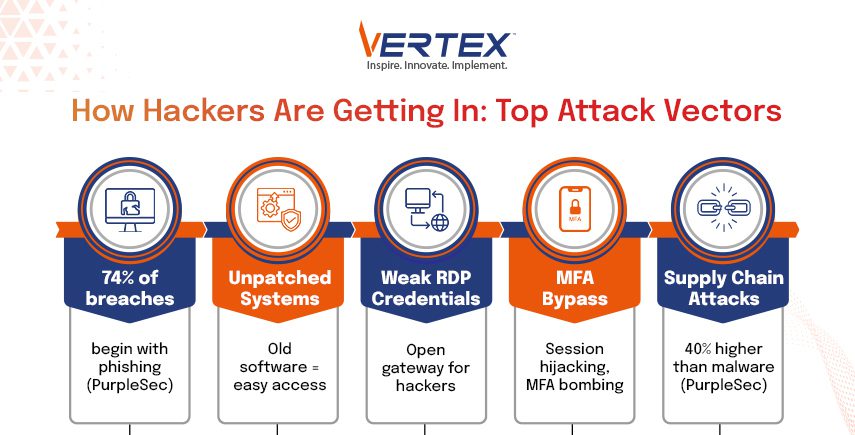
How are these sophisticated attacks initiated? The most common methods include:

  • The initial attack is often led by something that seems harmless, for example, phishing is used to trick employees. They make you click on malicious links disguised as an alluring offer, and that becomes the first entry point. According to a report done by PurpleSec, 74% of all breaches begin with a social engineering attack.
  • Unpatched Systems and Software Vulnerabilities: There are backdoors and weaknesses in firewalls and operating systems, and ransom gangs know about these loopholes and they exploit them to connect to network devices. Timely patching is non-negotiable.
  • Remote Desktop Protocol (RDP) Vulnerabilities: If your business has weak or compromised RDP credentials, then the probability of your business getting hit just skyrocketed.
  • Bypassing Multi-Factor Authentication (MFA): Breaking an MFA is crucial, but now with such advanced tactics, these gangs can blow past your MFA without breaking a sweat. They mostly use MFA bombing or session hijacking.
  • Supply Chain Compromise: Breaking down a trusted software provider or vendor is another method used by such attackers to distribute their network downstream, and according to a report by PurpleSec, supply chain attacks surpassed malware-based attacks by 40% in 2022.

Is Your Business Ready? A Comprehensive Readiness Checklist

Ransomware attackers are smart and they use new tactics and breaking points to infiltrate your business. We have compiled some of the best prevention methods you can use.

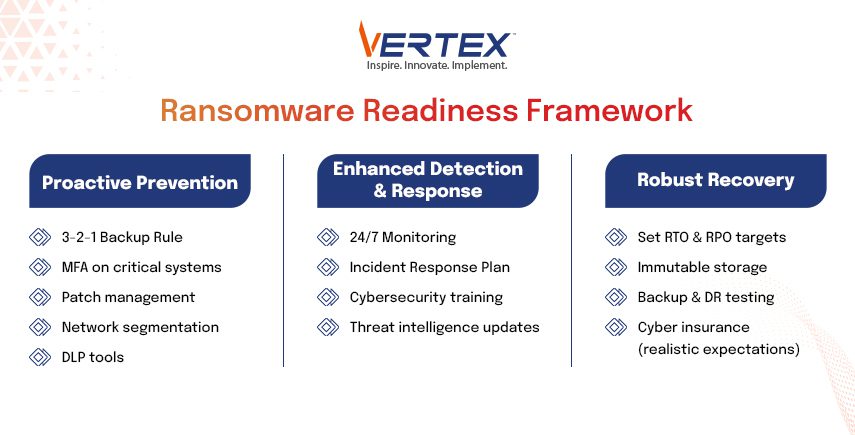
  1. Proactive Prevention and Hardening:
  • Robust Backup Strategy: This is the last measure in such an attack and the greatest defense you have against such attackers. Always follow the 3-2-1 rule, which states there should be three copies of data on two different media, and this includes one offline and off-site copy. You have to test your backups daily and ensure that they are malware-free.
  • Endpoint Detection and Response (EDR)/Extended Detection and Response (XDR): You should deploy an advanced level of EDR/XDR solutions, as they can detect and prevent ransomware activities. They are also capable of preventing data exfiltration in real-time.
  • Multi-Factor Authentication (MFA): Deploying a system that is MFA-protected for all critical and remote access privileges. This extra level of protection can save you from the next ransomware attack.
  • Patch Management: The business should own and maintain a patching schedule for all the operating systems and devices.
  • Network Segmentation: Instead of having one main stem of the network, divide it into isolated segments, which limits the attacker from lateral movement. Preventing them from spreading across the entire infrastructure.
  • Data Loss Prevention (DLP) Solutions: Tools like this should be used, which can monitor, detect, and block any and all unauthorized data transfer or data exfiltration.
  1. Enhanced Detection and Response Capabilities:
  • 24/7 Monitoring and Alerting: There should be real-time monitoring and alarms for any unusual data transfer and unauthorized access attempts. There should be SIEM and SOC capabilities to monitor any and all threats.
  • Incident Response Plan (IRP): Having a response plan is imperative, especially for ransomware. This plan should include the development of actionable communication protocols. With this IRP, the way of operation will have a clear trajectory.
  • Cybersecurity Training and Awareness: The organization should pay heed to the training of company employees on the latest phishing tactics, social engineering tactics, and safe browsing. Doing this will make sure there are no weak links in the organization.
  • Threat Intelligence: The business should keep up-to-date with the latest ransomware attacks, strains, and methods of entry. With the latest information, they can safeguard and better prepare themselves.
  1. Robust Recovery and Business Continuity:
  • Recovery Time Objectives (RTOs) and Recovery Point Objectives (RPOs): You should map out all the critical metrics that can be used for all the business-critical systems and data. Any recovery strategy should be aimed at meeting these metrics.
  • Disaster Recovery (DR) Plan: A well-crafted data recovery plan can help you maintain operations even after an attack has occurred. This includes methods of restoring critical operations and backups from alternative sites.
  • Immutable Storage: Make sure you splurge on storage solutions because a good storage solution will prevent your data from being altered or deleted by ransomware attacks, all the while giving you a clean recovery point.
  • Testing, Testing, Testing: There should be periodic checks for your backups, IRP, and DR plans as well. Drills are a great way to be in shape and be ready for a surprise.
  • Cyber Insurance: Though this is a safety net, it is crucial for every business in case things go south. You can recover your financial losses and can cover a lot of the costs, such as legal fees, public relations, and even ransom payments. In all honesty, not all insurance companies give you the value you have lost; you only get a chunk of it back in the insurance claim.

A Continuous State of Readiness

The threat of ransomware is in a state of constant flux, and this change is terrifying. In this article, we learned about the tactics, approach, and how aggressive these attacks can be. This is a wake-up call for all businesses to take this issue with the utmost caution and do everything they can to safeguard their businesses from such attacks. The average cost of one such attack is in millions, and this is not a one-time scenario If they have made copies of your data, they can extort money whenever they want.

The only way to prevent all this is to apply and adhere to all the safety measures that are discussed in this article and do regular checks on your data and the backups. Now, if you are feeling overwhelmed with all this information and do not have a clear roadmap, we at VertexCS can help you figure out all the safety measures and how to best implement them.

Achieving Cloud Financial Operations (FinOps) Excellence: Strategies for Enterprise Cost Control and Optimization

Cloud computing is successful because of all the perks it delivers, such as low operation costs and better reliability, flexibility, and innovation potential. However, the excessive use and adoption of cloud computing have given rise to a new paradigm related to the finances of cloud computing.

If left unchecked, it can spiral out of control to the extent that it will consume more money than traditional methods. Now, to prevent this from happening, we need services like Cloud Financial Operations, also known as FinOps.

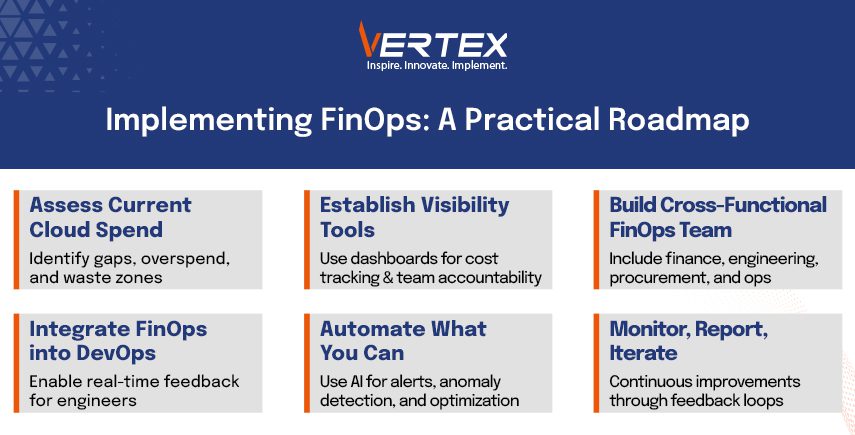
FinOps is a disciplined way to manage and track all the finances that are involved in cloud computing, and FinOps not only manages the money but also focuses on the business value front. Promising an organization better control, precision, and efficiency over expenditure.

FinOps is often misunderstood. This is not a cost-cutting regime that can only save you a few bucks. On the contrary, this is a practice that involves finance, technology, and business expertise and functions with the goal of maximizing business value from cloud investments.

The Growing Imperative of FinOps

We have witnessed the rapid adoption and implementation of cloud services in the last couple of years. This migration has shadowed the importance of FinOps, and most of the organizations are only focusing on the multi-cloud and hybrid cloud strategies, which only adds more to the complex situation of cost management. According to a report done by Global Market Insights, the global cloud FinOps market size was valued at USD 1.7 billion in 2023 and is projected to grow at a CAGR of 14.7% between 2024 and 2032.

Another report done by Insightec Analytics states that the Global Cloud FinOps Market Size is valued at USD 13.5 Bn in 2024 and is predicted to reach USD 38.0 Bn by the year 2034 at an 11.0% CAGR during the forecast period for 2025-2034. Both of these reports shed light on the critical need for FinOps services and how dire the need for it is. Companies are becoming more serious about their cloud expenses, and they want them to be properly maintained.

The most alluring promise that cloud companies offer is cost reduction; however, according to a report shared by Cloud Keeper, 67% of organizations experience higher-than-expected cloud costs. A report by Open Metal indicates public cloud waste is at 28%. Is It Time to Consider an On-Demand Private Cloud as an Alternative? Projections for 2025 suggest $44.5 billion in infrastructure cloud waste due to a disconnect between FinOps and development teams. “FinOps in Focus 2025” Report – PR Newswire. These statistics underscore the enormous potential for savings and the critical role FinOps plays in stemming this waste. Companies that implement FinOps practices have reported significant cost reductions, with some sources indicating an average of 30% reduction in cloud costs.

Core Principles of FinOps

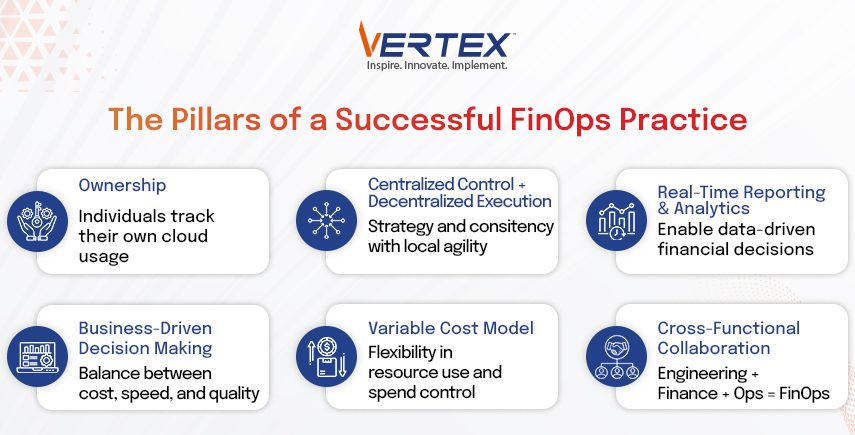
The FinOps Foundation outlines key principles that guide successful cloud financial management:

FinOps breaks the traditional bounds between engineering, finance, and operations teams and comes with the most innovative methods of identifying cost-saving opportunities. This is all possible because of the combined efforts and insight of teams, which helps in the overall flow of the process.

Ownership: If each individual is responsible for tracking their own cloud usage, then overall usage can be effectively managed. With individual reports, you can manage the cost and usage of cloud storage.

Centralized Control (with Decentralized Execution): Having an individual approach is great, but when this approach is overseen by a centralized team, the results are even better. This brings together expertise and consistency.

Reporting and Analytics: Financial responsibility can only prevail if the business sticks to real-time insights and data, which goes a long way to making data-driven insights and decisions.

Business-Driven Decision Making: FinOps is not only trying to do cost-cutting for the organization, but in its overall function, it also evaluates how much money is coming back to the business after all the trade-offs between speed, cost, and quality.

Variable Cost Model: Evaluation before implementation. If a business opts for the cloud’s variable cost model, then there are no issues with resource allocation and utilization.

Strategies for Enterprise Cost Control and Optimization

FinOps can only succeed if there is harmony and balance of strategic planning, technical execution, and cultural recognition.

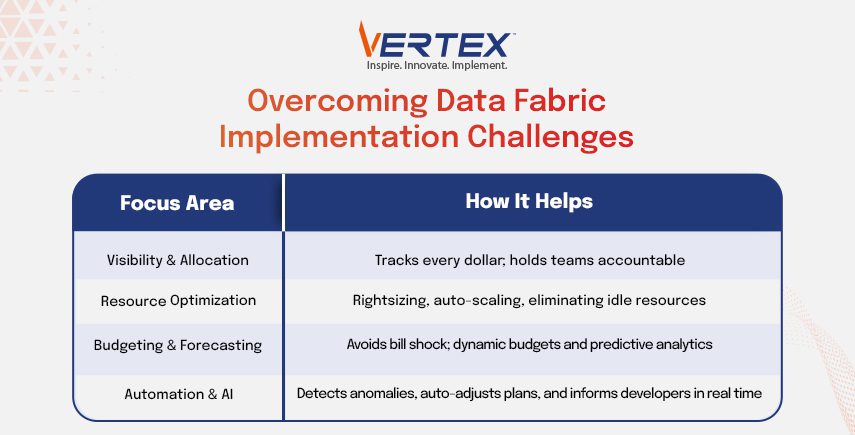
1. Enhanced Visibility and Allocation

The very first thing you need to do is track all the expenses and see where every dollar is being spent.

Detailed Cost Visibility: A lot of organizations struggle when it comes to keeping track of their finances related to cloud usage. They are unable to handle the complex nature of cloud pricing and become confused; therefore, the use of tools that provide granular insights into cloud usage is necessary. Without proper knowledge and clarity, it becomes much more difficult to track how cloud resources are being used. This can lead to a situation where assets incur a heavy loss without even realizing it.

Transparent Cost Allocation: If businesses can implement a cost allocation system, one that can track the proper amount being shared with different teams, then cloud spending can be tracked back to teams, projects, and business units. This results in better accountability and control over spending and allocation of future funds.

2. Proactive Resource Optimization

Optimizing resource utilization is a cornerstone of FinOps.

Rightsizing: Once the funds are allocated, businesses need to conduct regular checks to see the utilization of the funds. This entails that units or teams that are sitting idle or not working on any active projects do not need funds ,and that can be redirected to a department where it is needed. This can solve a lot of issues and also generate a flow that will not deplete with time.

Eliminating Waste: This step is crucial because it helps in decluttering the department and helps by decommissioning unused or idle resources. Automation with AI integration can easily execute this task and remove components, resulting in better visibility and preventing charge-back gaps.

Spot Instances and Savings Plans/Reserved Instances: Use cloud mechanisms such as spot instances for fault-tolerant workloads. This results in a lot of savings.

3. Budgeting and Forecasting

If you want to execute forecasting with strict budgeting you need to understand the points mentioned below.

Dynamic Budgeting: Cloud costs are inherently variable. FinOps teams need to develop dynamic budgeting models that account for fluctuating usage patterns and unexpected spikes.

Predictive Analytics: Utilizing predictive analysis features in FinOps tools can anticipate future costs, helping to avoid “bill shock” and allowing for proactive financial planning 16 Challenges The Right FinOps Dashboard Can Solve – StratusGrid.

Alerts and Thresholds: There should be checks for the spending threshold so that we get alerts whenever the limits are exceeded. This serves as a safety net, preventing any surprises.

4. Automation and AI Integration

Automation is key to scaling FinOps practices and reducing manual effort.

Automated Optimization: Cloud providers are constantly introducing new, more cost-efficient services. Automating the implementation of these changes, such as upgrading legacy storage models to optimized offerings, can lift the burden from engineers and continuously optimize resources Everything is better as code: Using FinOps to manage cloud costs – McKinsey & Company.

Real-time Cost Visibility for Engineers: Integrating FinOps tooling into development environments provides engineers with immediate feedback on the cost implications of their designs, fostering a “shift-left” culture of financial accountability.

AI for Anomaly Detection and Forecasting: FinOps will be using a lot of AI features in the coming time to keep a check of all the spending. Since AI can detect spending anomalies and resource allocations with ease.

5. Cultural Shift and Continuous Improvement

FinOps is as much about people and processes as it is about technology.

Cost-Aware Culture: Education of teams is something that can help in solving this issue since they will be aware of expenditure and savings. They will be self-aware of the amount of funds they are depleting and will be better able to track it.

Cross-Functional Collaboration: One thing that hinders the proper execution of FinOps operations is bad cross-team collaboration. This usually happens when there are communication issues and misaligned goals. This can, however, be prevented by joint planning sessions and a centralized governing body.

Continuous Optimization: FinOps is not that hard if you care about the business finances, then you will regularly check on the cloud spending practices and try to implement practices that can help in cutting down the cost.

Measuring Success and Overcoming Challenges

In FinOps we measure success by parameters like cloud cost reduction, increased resource utilization, improved forecasting accuracy, and enhanced cross-team collaboration. Though implementing FinOps has its own challenges.

Cultural Resistance: Whenever there is a complete shift in processes and new metrics and methods are implemented, there is always resistance. This resistance is what keeps teams from welcoming changes.

Complexity of Cloud Pricing Models: The pricing models of cloud computing are super complex and evolving almost daily. This can cause trouble for most businesses. Some of the well-known names with a complex pricing structure are AWS, Azure, and GCP.

Data Overload and Visibility Issues: When you have to deal with a massive amount of billing data, to gain visibility, the process can be tardy. This also causes a lot of hindrance in proper execution.

Skill Gaps: The lack of skilled professionals in financial acumen is frightening. Then there is a lack of operational understanding and no proper technical training or expertise.

Overcoming all these hurdles is not easy; you have to invest a lot of time, effort, and money. You have to create a setting where all the teams are in open communication and welcoming to new changes. Only then will the proper execution and implementation of FinOps be completed.

Conclusion

In this article, we have discussed the importance of FinOps and how it can help businesses navigate through the complex framework of cloud computing pricing. We learned about how we can track, navigate, and allocate spending in cloud computing. With the rapid adoption of cloud computing by businesses, there will be increased cases where businesses will struggle to manage their expenses. If your business is also struggling with the same issue, then reach out to our team at VertexCS, and we will take care of the rest.

Building a Unified Data Fabric for Strategic Business Decisions

The world is undergoing a digital reform, and soon all our businesses will be completely digital. When this happens, the most valuable asset that will emerge is data.

Yes, data, be it of any kind, raw, processed, or used. Companies that can harness and process large amounts of data and utilize it to their advantage will emerge as leaders. Now, if we talk about the current state of companies, then a whole lot of companies are struggling with fragmented data, and a lack of trust in their own data and its origin. To solve this problem, the idea of data fabric was introduced. This is an idea that entails an architectural approach for data management, better accessibility, and most importantly, a real-time view of all the data and business operations.

Data fabric is designed in a way that it can hold data from different sources; these sources can be on-premise, cloud, hybrid, and even multi-cloud. They also use integration and advanced AI analytics to create a single intelligent and self-optimized data repository. Once this is done, the result is a consistent, unified, and reliable data source that can hold and support future insights and claims, all driven by this data.

The Imperative for Unification: Addressing the Data Dilemma

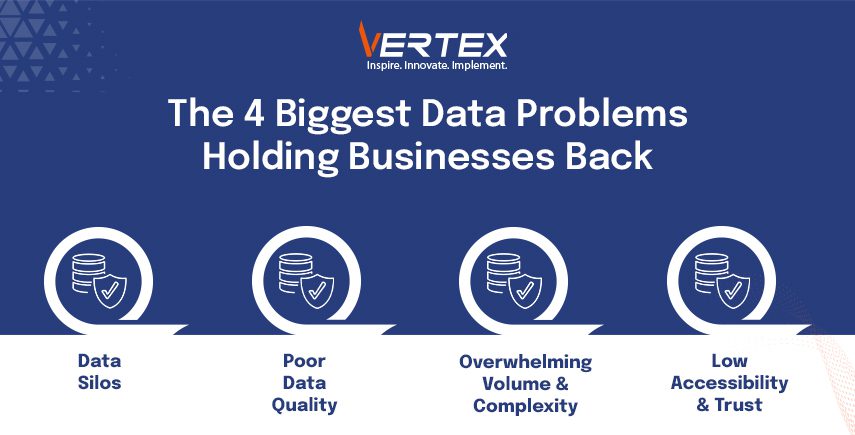
Companies using cloud computing and other cloud networks generate vast amounts of data regularly, yet when they have to use this data to make informed decisions, they struggle. This is because of the challenges that we have discussed below.

  • Data Silos: Data silos are individual packets of data that are trapped in departmental or app specific systems. This data is often overlooked, and because of this, we can not create a unified view of business. According to a report done by Infoverity, As businesses introduce new technology to their systems, data silos are more likely to arise. More than 40% of surveyed organizations have struggled with this.
  • Poor Data Quality: Having a lack of data is bad, but having a lot of data, but the quality and origin of that data is not trusted, then that is much worse. Furthermore, this flawed and incomplete data can lead to poor decisions that can cost companies millions. According to a report by Gartner, poor data quality costs organizations an average of $12.9 million per year.
  • Data Complexity and Volume: Handling bulk amounts of data can be troublesome. The volume and variety of data that exists make the traditional approach useless. Data professionals spend most of their time combing through terabytes of data. According to Projectpro, data professionals spend 60% of their time organizing and cleaning data. Also, 57% of the individuals also dubbed it the most boring task of all.
  • Lack of Accessibility and Trust: Companies have data, but they are unable to make use of it to their benefit. This leads to companies depending more on their gut than on data-driven insights.
  • The challenges that we discussed above are the reason why companies are understanding the need for a unified data fabric. This understanding has made companies adopt data fabric for their operations, resulting in the overall growth of the data fabric market. According to Fortune Business Insights, the global data fabric market size was valued at USD 2.29 billion in 2023. The market is projected to be worth USD 2.77 billion in 2024 and reach USD 12.91 billion by 2032, exhibiting a CAGR of 21.2% during the forecast period.

Core Components and Principles of a Unified Data Fabric

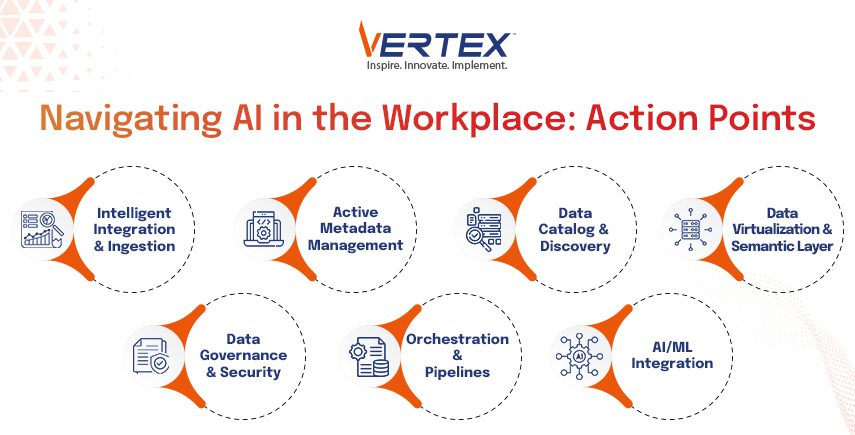
Building a data fabric is not easy, since it is built using several foundational components that work together.

  • Intelligent Data Integration and Ingestion: The fabric must be built to manage data from multiple sources, whether batch, streaming, or API-driven. To do this, there should be proper use of connectors, ELT/ETL tools, and real-time data streaming capabilities.
  • Active Metadata Management: This is the “brain” of the data fabric. Active metadata goes beyond static descriptions, constantly analyzing data usage, lineage, relationships, and performance to recommend optimal data pipelines, transformations, and access patterns. According to a report by Gartner, by 2024, data fabric deployments would quadruple efficiency in data utilization while cutting human-driven data management tasks in half.
  • Data Catalog and Discovery: Having a data repository is useless if we can not search and use the right dataset, so a searchable inventory is a must. This searchable inventory will help us to find, understand, and access relevant data assets, and with AI, it can be automated as well.
  • Data Virtualization and Semantic Layer: This provides a viewing dashboard that can help display all the business-friendly data that can be used further. This step is achieved by removing all the underlying complexities and irrelevant data. Once this is done, there is a single unified data resource that can be revisited whenever necessary.
  • Data Governance and Security: When working with this much data, government compliances become mandatory, and with bodies like GDPR and CCPA, data compliance across all policies is needed. According to Gartner, companies that successfully implement robust data governance policies alongside their integration efforts report 68% higher data quality scores
  • Data Orchestration and Pipelines: The fabric helps in the automation and optimization of data flows, transformation, and preparation. This means that we have to also automate data management tasks, so that it reduces the time data scientists spend on it.
  • Automation and AI/ML: Data fabric gets a serious boost when paired with machine learning algorithms. This results in better data discovery and quality checks and better optimization and predictive insights.

Benefits for Strategic Business Decisions

There are many advantages of implementing a unified data fabric and some of those benefits we have discussed below.

  • Accelerated Time-to-Insight: Since there are no more silos of data, the time taken in accessing and analysing the data is reduced significantly. This allows the business to be quicker in terms of market change.
  • Enhanced Data Quality and Trust: When a business constantly revisits its data quality rules and complies with every government rule, the quality of the data automatically improves. Furthermore, the reliability of data is increased.
  • Improved Data Accessibility and Democratization: There is also the benefit of improved user accessibility, business users, analysts, and data scientist have their own view of the curated data. This helps them in making their own decisions, which will benefit the organization.
  • Reduced Operational Costs: When there are no duplications in data, it significantly reduces manual effort and optimizes storage and costs, which helps the business thrive.
  • Superior Strategic Decision-Making: With a centralized, real-time insight into unified data, a business can make more accurate forecasts and predictions. They are also able to identify underlying patterns and emerging trends more easily.

Challenges and Implementation Strategies

There are certain challenges that every business will face while building and implementing a unified data fabric. We have discussed some of them below.

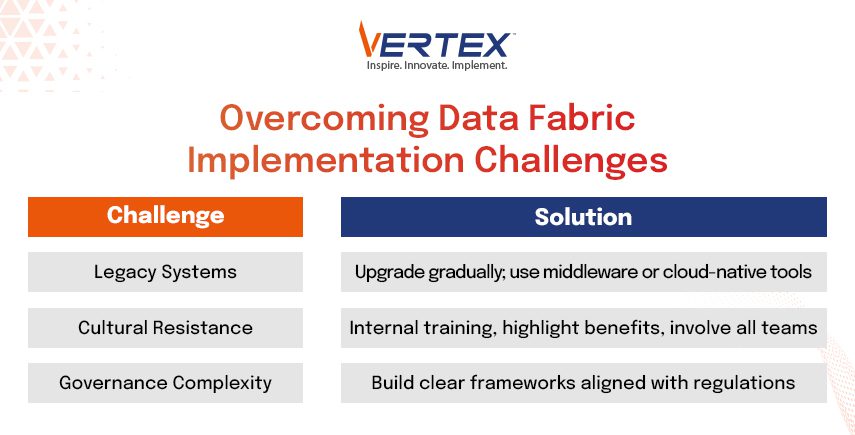
  • Legacy Systems and Technical Debt: Integrating data fabric in systems that are outdated can be complex and, for sure, hinder the process.
  • Organizational and Cultural Resistance: The shift from the traditional method to a more collaborative one is another challenge faced by many businesses; this can be avoided with proper training of departments.
  • Data Governance Complexity: Establishing and then adhering to all the government policies is another challenge, and with such vast amounts of data, navigating through each compliance requires focus.
  • Skill Gaps: There are pre-existing skill gaps in people working in the departments who are not trained to handle such a data interface, and cit an be a rigorous process.

Strategy for a Successful Implementation

  • Instead of going all out first, isolate the critical business problems that can be resolved with a unified data fabric. Once you get tangible results, then you can switch to a bigger model.
  • Start with a specific data set, and once you are able to achieve the desired result, you can expand the fabric to accommodate different data sources.
  • Carefully research all the available fabric platforms and tools that will best suit your needs, and then factor in the cost you are willing to spend. Including platforms that operate using AI/ML is a major plus.
  • A strong data governance framework goes a long way in helping the organisation establish a unified data fabric.

The Future is Fabric-Driven

With businesses approaching and embracing cloud computing more and more, real-time analytics and data-driven insights are crucial to come to the top. Having a unified data fabric can easily solve this problem, as we discussed in this article how a unified data fabric can cut down process timings, operational cost, and increase data-driven insights, profit, and reliability. So if you are a budding organisation confused about how to establish its own data fabric, do not fret, connect with us at VertexCS and we will take care of everything.

Leveraging AI and Machine Learning for Operational Efficiency and Innovation

The business landscape is getting more and more competitive by the second, and coming out as an industry leader is becoming more and more tough. Organisations are struggling with increased costs, irregularities in operations, and an innovation block. In this dire time, Artificial Language and Machine learning have emerged as the tools that can save the day and provide the required solution. AI and ML both can help you generate insights that are data-driven, with predictive capabilities, and you can save a lot of money as well.

Understanding AI and ML in the Context of Operations

AI or ML can be an extension of ourselves out there doing most of the heavy-duty work, if trained with the right datasets. AI can be programmed to carry out tasks via machines and automated assemblies; meanwhile, machine learning can be used to learn about patterns and trends, and insights from all the data collected can then be used for our benefit. AI and Machine Learning can be used for the automation of routine tasks, tasks that do not require human attention. After this is done, you can allocate the freed-up resource to a team where they can contribute more. One of the best benefits of AI and ML is that they can give your customers a customized experience.

Key Areas Where AI/ML Drive Operational Efficiency

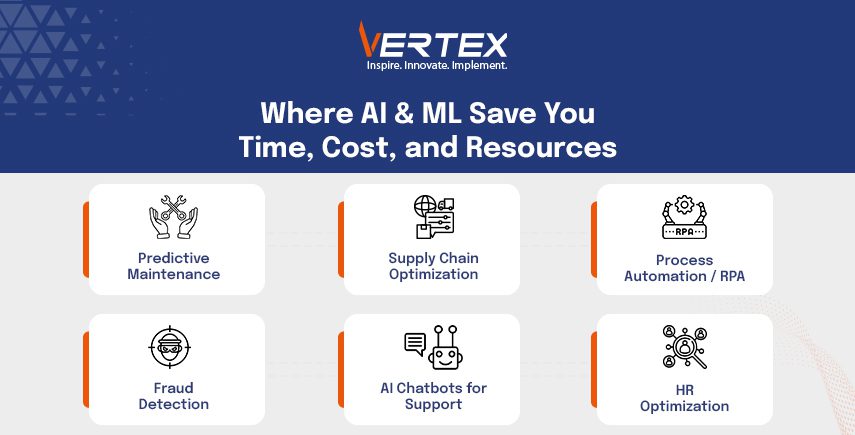
  1. Predictive Maintenance in Manufacturing and Infrastructure
    Predictive maintenance is done by the data from the assembly line, both old and new data are processed to predict the future outcome, and prevent any future breakdown. This saves a lot of time, cost, and asset life, and the maintenance issue is resolved.
  1. Supply Chain Optimization
    Machine learning can also help in predicting trends, patterns, and inventory. They analyze the already existing data as well as the real-time variables such as weather, traffic, inflation, and more. You can also use them to isolate inefficiencies and bottlenecks in the organisation. Amazon is a well-known example of this; they use AI  to optimize their warehouses, routes for delivery, and even logistics.
  1. Process Automation and Robotic Process Automation (RPA)
    AI automation is not limited to operating machinery or data processing; it can structure data, understand natural language, and make decisions without human intervention. These characteristics make it a super useful tool to master. A lot of organisations use AI as their POC and customer grievance officer.
  1. Fraud Detection and Risk Management
    AI is best when it comes to detecting any anomalies in the system, and organisations use this to detect fraud, non-compliance, and unauthorised access. Whereas, ML algorithms are continuously evolving due to the increase in the number of frauds and the latest methods of online theft.
  1. Customer Support and Service Operations
    Using AI chatbots in place of human employees is the new trend and rightly so, where a human employee can handle one query at a time, AI can target multiple queries and solve them. Big organisations like Zomato and Swiggy are using their own chatbots as the first point of contact for any grievances.
  1. Human Resource Optimization
    AI also works as an  HR associate, it scans resumes to find the most relevant one, analyzes performances, and workforce planning. This enables the HR to make more decisions and utilise the time in projects that require more attention.

Driving Innovation Through AI/ML

AI and ML are not only good for handling businesses, they are also great at enabling new business models and products. We have discussed them below as well.

  1. Product Development and Personalization
    Machine learning models can be programmed to analyze customer behavior patterns, expenditure curves, and feedback so that you can curate an experience that is best for your customer. AI-driven customizations can guarantee a good customer service experience.
  1. Dynamic Pricing Models
    You can also use ML to determine the pricing of your services, basing it on the demand for the product, cross-referencing it with your competitors’, factoring in inventory, and then setting the final price. Both Uber and Rapido use dynamic pricing for their service based on several factors.
  1. Intelligent Decision Support Systems
    AI-enabled dashboards help leaders make decisions and also look after the performance of all employees. They can check their inventory, and from the insights they gain, they can gain knowledge about the organisation.
  1. Innovation in Healthcare and Life Sciences
    AI is also used extensively in healthcare and drug discovery; it can generate a patient report based on old medical records and suggest treatment plans. This helps reduce a lot of the cost of research and development.

Implementation Challenges and Mitigation Strategies

Now that you understand the benefits, you must also learn about the challenges that most organisations face during the implementation of AI/ML.

  1. Data Quality and Availability
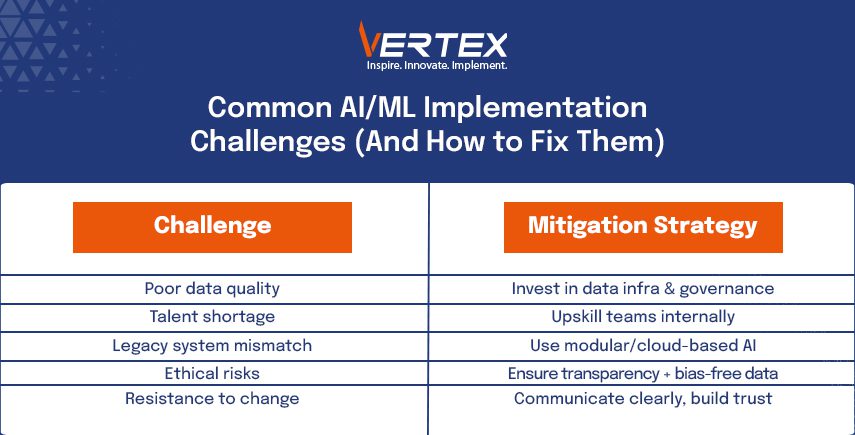
    The efficiency of any AI or ML model depends on the datasets they are trained on, so if the data is of poor quality and fragmented, then the results will be the same. You will not be able to rely on the suggestions given by the AI models; furthermore, there will be no real-time data insights. To prevent this, you must invest in a data infrastructure and make sure there is data governance and compliance.
  1. Talent Shortage
    This is the most commonly shared challenge among different organisations; there are not many skilled AI professionals who can work on AI and ML models. This can only be solved by upskilling the entire department, teams, and superiors. Once they are trained and familiar with the models, they will be able to leverage the full power of AI.
  1. Integration with Legacy Systems
    You can not use the latest AI models with outdated systems used in organisations, as the system will not be able to handle the processing power of AI and will eventually malfunction. This can be avoided by adapting modular AI solutions or cloud computing solutions. However, adopting these solutions will cost the organisation a significant amount.
  1. Ethical and Compliance Concerns
    There are departments, sectors, and verticals where all the decisions need to be transparent and fair. There should be no bias in them, like healthcare, defense, HR. Now, in these sectors, if AI is used in decision-making, then we need to ensure that there are no biases in the data used to train the AI. This falls under our ethical responsibility.
  1. Change Management and Resistance
    AI is already a topic of discussion amongst most employees as they fear that with automation and AI, they will lose their jobs. Now this fear is real, and in order for them to move past it, they need to understand that AI is a tool that is for their own benefit. This can only be achieved with clear communication and trust-building exercises.

Best Practices for AI/ML Adoption

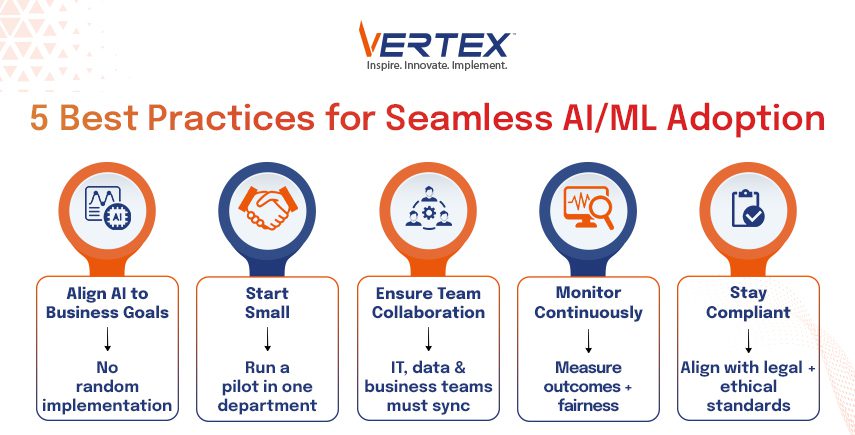
  • Do not implement AI just for the sake of keeping up with trends; first, align your projects and needs, and understand the implementation process by a professional. Furthermore, if there is no need and you implement AI, you might lose money instead of saving it.
  • Go with a segmented approach, never implement AI or ML across the entire organisation, and experiment first with a single department. If the results of the ROI are according to your expectations, then only expand the implementation.
  • Make sure the involved departments like data scientists, IT teams ,and domain experts, are in sync and communicating clearly, otherwise it will be chaotic.
  • Do not sit idly after implementation; monitor every single change, performance, fairness, security, and make sure everything is going well.
  • Make sure that your AI models or ML models are up-to-date with government compliance.

Conclusion

AI and ML are crucial if you want your business to be a big hit. They are not capable of driving several aspects of business and improving them with data-driven insights. Predictive analysis plays a big role here in identifying trends, customer behavior patterns, and inventory as well. In this article we have discussed the benefits along with the challenges that you will face during the implementation of AI and ML models, so to save you the extra work contact our expert team at VertexCS and see how you can make your business better.

How Digital Transformation is Reshaping Industries: A Deep Dive into Future Trends

Digital transformation is the change that is going to bring about a new age for businesses and organizations for the entire world. By utilizing advanced technologies and data analytics, businesses are improving their overall operation, customer experience, and revenues.

Businesses are expanding into unknown territories, as they are confident that the data they have will help them scale that territory as well. However, businesses that are not adapting to digitalization are being left behind in the race and are unable to compete with those who are utilizing these technologies.

In this article, we will study the impact of digital transformation on various industries. We will also learn about the emerging trends and challenges that businesses face and solutions for them as well.

The Current Landscape of Digital Transformation

Businesses are rapidly moving towards digitalization as is evident in this report by Statista, which states that global spending for digitalization is predicted to reach $2.5 trillion by 2027.

This kind of expenditure is proof that companies are eager to adopt digitalization. According to IDC, businesses that adopt digitalization can make up 50% of the world’s GDP. Adapting digital transformation is not a competition but a necessity, only when

you have crossed over will you be open to seeing new revenue streams and opportunities, achieving better workflow, and much more.

Once you have been onboarded with a digital service provider as an ROI, you will see the operational cost go down, along with improved customer engagement.

Industry Adoption Rates

Industries have been rapidly adopting digital services as they want to grow in this competitive landscape. According to Exploding Topics, the total market value of Digital services is estimated to be $911.2  billion. It also states that 72% of the companies have already adopted the transformation.


Sector-Specific Impacts ( Manufacturing )

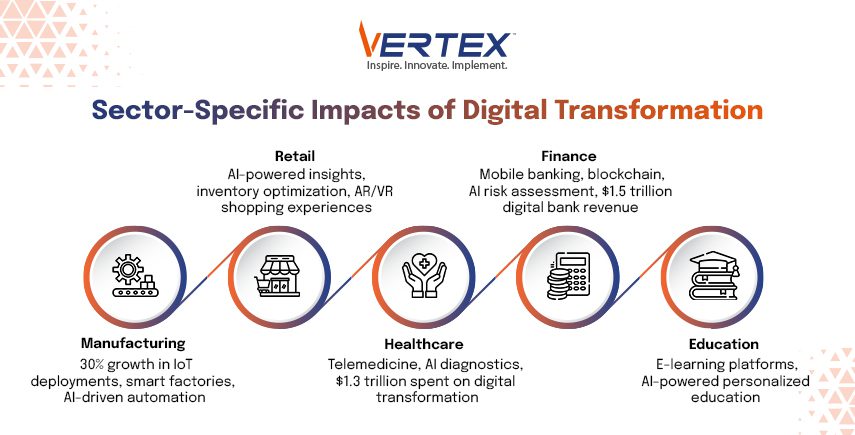
The manufacturing industry is experiencing a 30% growth in Internet of Things (IoT)deployments, and this is one of the factors driving the increased performance of supply chain management. IoT integration helps with real-time monitoring and prediction and in reducing downtime and overall operational costs. Nowadays, smart factories are becoming more and more common, and the human element is being replaced by AI-enabled robots. The calculations are all automated, and this is beneficial to some extent as well.

Retail

In the retail market space, business owners are leveraging the power of data analytics and AI to draw out strategies and enhance customer service experience. Not only this, they are also optimizing their inventory, optimizing the operations across different sectors, and even automating a good part of their workflow. This is all because more than 71% of the industry has already agreed and is in the process of undergoing a digital transformation, as evidenced by this report from Quixy.

Not only this, the E-commerce industry powered by AI-driven insights and Chatbots is far superior when it comes to customer engagement, they can take on hundreds of complaints. Meanwhile, Augmented Reality (AR) and Virtual Reality (VR) are being adopted by the shopping industry to elevate the online shopping experience of the customer.

Healthcare

Digital transformation in the Healthcare industry consists of telemedicine, electronic health records, AI-driven diagnostics, patient care, and operational efficiency. This is not the end we also witnessed implants made by AI-imaging and even grafts formed by machines operated by AI. This is the future that healthcare is heading towards and according to a report done by the World Economic Forum, the total amount spent to this day to convert healthcare into a digital landscape is more than $1.3 trillion worldwide.

Finance and Banking

The financial sector is blooming with digital transformation, be it mobile banking apps, blockchain, or digital wallets. If you are still thinking that finance is not blooming enough, then this report by Statista will help you understand better because, in this report, the net interest income of digital banks is mentioned to be near $1.5 trillion dollars in 2024.

Then, there are AI-enabled risk assessment tools that make online banking safer by scam pattern tracking. There are AI-powered tools that help institutions make sound financial decisions. The traditional bank models are being overthrown by Cryptocurrencies and decentralized finance.

Education

This particular industry is the most driven when it comes to digital transformation; industry leaders have been implementing digital classes and personalized learning experiences that will make education accessible and engaging for everyone. There is also the rise of remote learning, educational institutions, and cloud-based platforms. All these services are in place so that people from all around the world can have a seamless learning experience.

Emerging Trends Shaping the Future

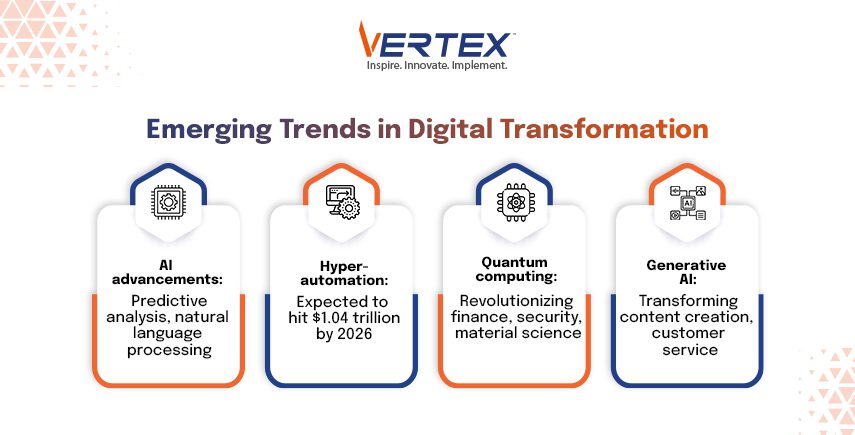
Business owners and hedge funds are now investing more and more in Artificial Intelligence. With companies like OpenAI, Microsoft, and DeepSeek, people are understanding the potential of AI. The focus is now shifted towards developing advanced models of their existing AI chatbot. Which can then be used in predictive analysis and natural language processing as this is the future for all industries across the globe.

Hyper-Automation

According to Gartner, by 2026, the market for hyper-automation-enabling technology is expected to reach a revenue of $1.04 trillion by 2026 with a CAGR of 11.9%. Hyper-automation is the use of AI and machine learning to solve and automate complex business processes, which results in increased efficiency and reduced overall cost. Similarly, industries have adopted Robotics process automation for tasks that are repetitive in nature and do not require human supervision.

Quantum Computing

Quantum computing is a way for us to transform many fields, such as material science and finance, by solving complex multilevel problems more efficiently and fast than an average human or traditional computer. Businesses are already exploring and investing in algorithms that will help them optimize security and financial modeling.
Generative AI in Content Creation

Generative AI is revolutionizing content creation, design, and customer service by processing vast datasets to generate innovative outputs. This technology enables businesses to create personalized content at scale, enhancing customer engagement and satisfaction. AI-powered writing assistants, video generators, and design automation tools are streamlining content production for brands and media houses.

Conclusion

Digital transformation is a crucial step for any organization or business that is planning to scale itself. In this article, we have covered different industries and how digital transformation has benefited them. Businesses that adopt these tools and technologies have a much better chance at surviving in the next five years as compared to those still stuck on the traditional approach. We have AI-enabled solutions for everything, be it healthcare, tourism, finance, or robotics.

Now that you understand the importance and effects of digital transformation. What steps are you going to take to help your business to adapt to this digital landscape. If you are feeling overwhelmed, then do not worry. Simply contact our experts at Vertex CS, and we will help you make a data-driven decision that will get you back on track.


Post-Implementation Strategies: Measuring ROI on Salesforce Investments After Go-Live

Return on Investments (ROI) is the only number or metric that is the most sought in any industry. ROI for Salesforce implementation is also crucial as the returns can only tell whether the applied CRM is effective or not post-go-live. In this article, we will learn about strategies to measure ROI to highlight the key performance indicators (KPI) and cost considerations. Continuous evaluation of the system is necessary in order to make sure the CRM is profitable and yields the results promised before it goes live.

Understanding ROI in Salesforce

Return on investment is a financial metric that tells us the profitability of an investment. This is done by comparing the net profit to the cost put in. The ROI formula can be understood as mentioned below.

{ ROI = (Net Profit / Cost of investment) X 100 }

This formula can be used to determine whether the Salesforce investment is yielding positive returns or not. This allows the organization to compare multiple of its investments. However, returns do not always mean money for example, there was an increase in communication time from employees to customers and leads, a 28% increase in sales results, as evident in the report done by TTMS. Increment in these metrics is also a form of ROI.


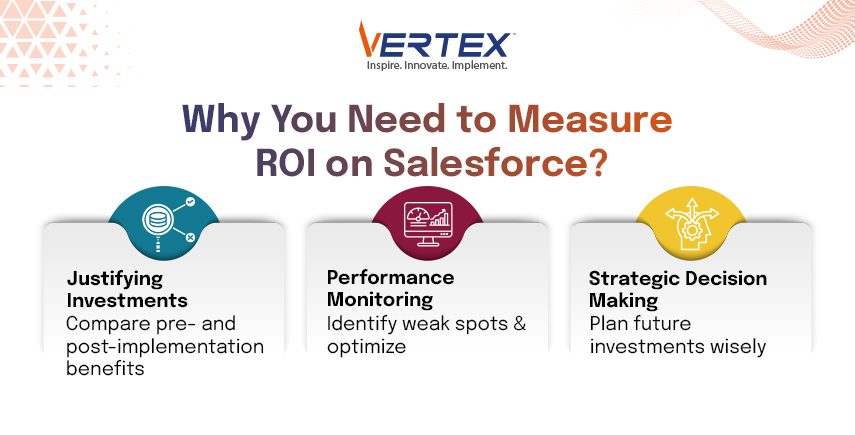
Importance of Measuring ROI

Measuring ROI in Salesforce is essential for several reasons:

  • Justifying Investments: Any investment has to be justified by quantifiable results, or else the business run down. In this case, after the implementation of Salesforce, the returns should reflect the benefits from the time when Salesforce was not live.
  • Performance Monitoring: With routine performance evaluation businesses can identify the areas where they need to improve and work on the betterment of that part. This benefits the organization in the long run.
  • Strategic Decision-Making: Once you understand the ROI structure and the factors involved, you can reevaluate your plan, and with the newfound knowledge, you can work on future investments. Nucleus Research also stated that investing in CRM is a sound decision, as you get $8.71 for every dollar you spend on CRM.

Key Performance Indicators (KPIs)

KPIs are defined to evaluate ROI, this helps in effectively tracking the ROI of a business. Some of the common KPIs are mentioned below.

  • Sales Efficiency: Salesforce is most beneficial and crucial for the sales department. So, metrics like lead conversion ratio and sales cycle are defined to help assess the efficiency of the sales team.
  • Customer Satisfaction: Customer feedback score or happiness index and Net Promoter Scores (NPS) indicate improvements in customer relationships due to better service delivery. If the numbers are down, the business needs to work on customer service.

Operational Efficiency: The smooth and quick operation of any organization is also counted as an ROI. Salesforce can automate processes and improvements.


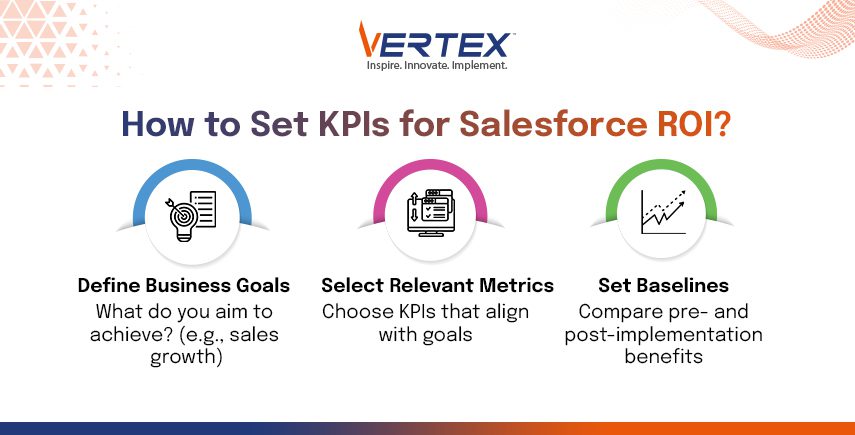
Establishing KPIs

We talked about some of the common and known KPIs; now, you will be learning how you can set your own KPIs. This

  1. Define Business Goals: The first step is to define what the organization strives to achieve with Salesforce for example it can be better sales or customer retention.
  2. Select Relevant Metrics: Choose KPIs that directly reflect progress towards these goals, ensuring they are feasible.
  3. Set Baselines: We need a control baseline that needs to be established before you make Salesforce go live. This will be useful for comparison before and after the CRM is online.

Cost Considerations

If we were to calculate the ROI without any room for error, then we need to make sure that we start with an accurate cost calculation. The cost associated with Salesforce can be categorized into two parts.

  • Initial Costs: Licensing fees, customization expenses, and training costs incurred during the setup phase.
  • Ongoing Costs: Subscription fees, maintenance expenses, and costs related to continuous training and support.

According to Closeloop, the estimated price for Salesforce implementation ranges between $10,000 to $150,000, depending on the project’s complexity. Post implementation, the organization can expect a rise in total revenue by 37%.

Calculating Total Costs

To calculate total costs effectively:

  1. Document All Expenses: Maintain a detailed record of all costs associated with the Salesforce implementation.
  2. Include Hidden Costs: Indirect costs are to be measured as well, such as the time an employee spends on his training and potential disruptions.
  3. Regularly Review Costs: Periodical assessments of costs will help you to identify the areas where savings can be made.

Measuring Benefits

The benefits derived from Salesforce can be divided into measurable and non-measurable categories:

Measurable Benefits

These benefits can be quantified and directly linked to financial outcomes:

  • Increased Revenue: We have to track sales growth in order to attribute it to improved sales processes facilitated by Salesforce.
  • Cost Savings: Once the CRM is live we have to measure the reductions in cost as there will be automation processes and improvements because of Salesforce.
  • Enhanced Productivity: Calculate time saved by employees through streamlined workflows and reduced administrative tasks.
Non-Measurable Benefits

These are harder to quantify, but are equally important:

  • Improved Customer Relationships: Improved engagement through personalized interactions will result in increased customer loyalty.
  • Better Data Management: Centralized data can improve decision-making processes across the organization.

Continuous Evaluation Post-Go-Live

Post-implementation, it is crucial to monitor the changes Salesforce is bringing to the organization. For checking wether or not the desired outcomes have been met.

Regular Monitoring

Establish a routine to monitor KPIs; this will ensure that the businesses are tracked for their performance against the previously established goals.

  • Monthly or quarterly reviews of key metrics.
  • Utilizing dashboards for real-time data visualization.
Feedback

Creating channels for feedback from users can provide insights into areas needing improvement. This could include:

  • Surveys or interviews with sales teams about their experiences using Salesforce.
  • Regular check-ins with stakeholders to discuss challenges and successes.
Adjustments Based on Insights

Organizations need to register feedback and then make changes based on these feedbacks.

  • Additional training sessions for employees.
  • Customizing features based on user needs or industry trends.

If businesses want continuous growth, then they have to be flexible. Investments do not yield a short-term profit; we have to aim for the long run, and keeping the business open to change and Dynamic will help us achieve that.

Case Studies Highlighting Successful ROI Measurement

Examining successful implementations provides valuable insights into best practices for measuring ROI. For example:

  • A study by Nucleus Research found that companies using Salesforce experienced an average increase in sales productivity by 15% within just a few months post-implementation.
  • A random customer survey of 6,200 customers of Salesforce CRM by an independent third party, Market Tools Inc., revealed that the increase in the total volume of sales leads was 50% and the increase in the number of leads converted to sales opportunities was also 50%.

Conclusion

Measuring ROI on Salesforce investments is much more than just the cost of implementation and the revenue post-implementation. This is a multilevel process that involves quantified and user experience data to give out the actual ROI. We define KPIs and then track those KPIs, we track customer happiness index, employee retention, and even the efficiency of employees post-implementation. We track lead conversion ratio and sales cycle as well.

Now, if you need any help with Salesforce implementation and want to learn more about practices and strategies to track your ROI, you can reach out to us at Vertex CS.

Cybersecurity in the Digital Age: Protecting Your Business from Evolving Threats

The entire world is coming online. Business communications trading everything is now on a server and can be remotely accessed.

With this rapid shift, businesses are vulnerable to cybersecurity threats. According to a report by Statista, more than 880 thousand people reported cybercrime only in the U.S.

This leaves us with the question of how safe our business is.

Cloud storage attacks and supply chain attacks are the most common and most harmful, as well.

You can read more about it in Statista’s report.

The Importance of Cybersecurity

Cybersecurity includes a range of practices and technologies designed to protect networks and businesses from malpractices and harmful actions.

Cybersecurity practices are growing and adapting to the increase in cyber threats and crimes.

Cybersecurity is a growing industry, as evidenced by this report from Statista.

The report clearly reflects the projection of revenue from US$ 167.3 billion to US$ 271.9 billion by 2029.

The consequences of inadequate cybersecurity can be severe.

Data breaches can lead to significant financial losses, reputational damage, and legal repercussions.

For example, the damage done by cybercrimes in the U.S. alone was 12.7 billion dollars, which is a 21% increase from 2023.

Additionally, businesses that experience a breach often suffer from problems like loss of customer trust and increased observation from government bodies as well.

Evolving Cyber Threats

As technology evolves, so do the tactics used by cybercriminals. Some of the most prevalent threats include:

  • Ransomware: This is malicious software that will lock your system down with a safety protocol. These kinds of software can also lock you out of your own laptop or devices or encrypt your data files. Then, in order to use them again, you have to pay ransom to the person operating this software. According to Sophos, the average ransom collected through these kinds of attacks was $2.73 million in 2024.
  • Phishing: Phishing is when you are being tricked into revealing your sensitive information like social security number and credit card details, and in the case of business, it can be passwords, emails, and even access logins. According to a report on Phishing, close to one million people fell victim to this only in the first quarter of 2024.
  • Distributed Denial-of-Service (DDoS) Attacks: These attacks overwhelm a network or service with traffic, rendering it unavailable to users. DDoS attacks are harmful for businesses, though they are not a security breach, but while this is into play, a lot of other malicious activities can occur on your website or servers. Last year, Cloudflare mitigated the largest DDoS attack, reaching up to 5.6 terabits(Tbps) per second and 666 million packets per second. The attack lasted for 80 seconds. In these 80 seconds a lot of damage was already done.
  • Insider Threats: Employees who access sensitive information can pose significant risks, whether intentionally or unintentionally. Gurucul did a report in which they stated that 48% of organisations have reported more insider threats in the last 12 months. Not only this, but 83% of organisations have reported at least one insider attack.

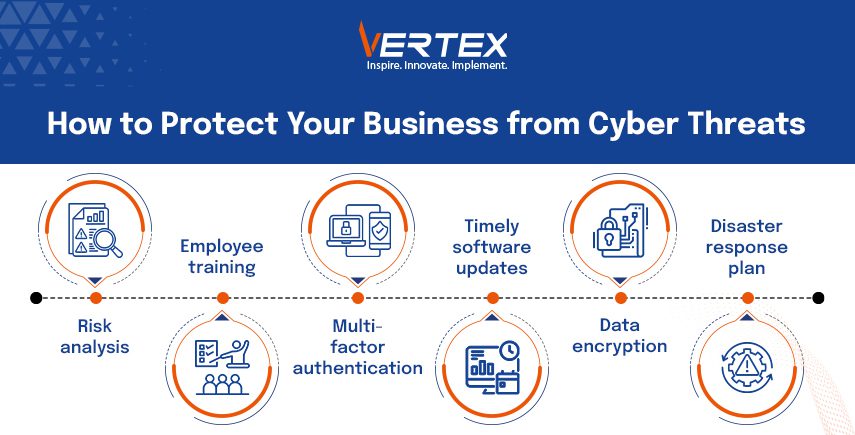
Vertex infographic on cybersecurity tips: risk analysis, training, MFA, updates, encryption, and response.

Prevention Measures for Cyber Threats

We have already covered how cybercrime is at an all-time high, and so are different types of online threats.

To safeguard your organisations and businesses, you must take some extra steps. Some of them are mentioned below

1. Analyzing Potential Threats

  • The first prevention measure you can take is to make sure you analyse your system security at regular intervals. Doing this will ensure proper functioning, and you can also isolate any vulnerability that you may find.
  • You must evaluate risks based on impact and likelihood to minimise cybersecurity threats. Through this, we can very easily calculate the risks. The formula works like Risks = Impact x Likelihood.
  • Once the risks are evaluated, we can decide how many resources we need to tend to a high risk compared to a low risk.

2. Employees Awareness Towards Cyber Threats

  • Organisations must invoke training of employees to make them aware of different types of cybercrimes. They should also be given training as to how to identify and response if such a situation is upon them.
  • Do mock phishing drills and DDoS attack drills so that employees or organisation members know the protocols to take during such a situation.

3. Multi-Factor Authentication (MFA)

  • Multiple forms of verification are required before granting access to sensitive systems. Biometrics and vocal authentication work best in these cases.
  • MFA significantly reduces the risk of unauthorised access. This will also significantly reduce the insider threat by a large margin.

4. Timely Software Updation

  • Ensure that all software and systems are up-to-date with the latest security patches. Never go for pirated versions of software.
  • Cyber crimes mostly occur in organisations with outdated software and security software.

5. Data Encryption

  • Encrypting the data is one of the most well-known methods of keeping your data and sensitive information safe. This adds an extra layer of security to your data
  • Different levels of encryption should be used to make sure a pattern is not formed. Making it harder to decode.

6. Disaster Response Plan

  • Develop and regularly update a protocol or SOP outlining steps to take in the event of an attack. This will result in swift action without any confusion.
  • Conduct drills to ensure that employees know their roles during an incident.

AI and Machine Language in Cyber Security

Artificial intelligence and machine learning have both been utilised by many organisations to analyze a large amount of data and to recognise any patterns, anomalies, or vulnerabilities.

Many organisations have already adapted and incorporated these two in their process to prevent cyber security threats.

According to a report by MarketsandMarkets, the AI market in cybersecurity is estimated to reach $60.6 Billion by 2028.

With more and more companies moving to the cloud, security threats are increasing daily.

A survey by McAfee found that 83% of organisations experienced at least one cloud-related security incident in 2020.

This number is increasing rapidly, and similarly, cloud security methods are also getting updated so that they are ready for any threats.

According to a report by Statista, the annual revenue of 2024 for cloud security is 2 billion USD.

Compliance and Regulations

When running a business, it is necessary to abide by the laws put forward by the government and comply with them.

When we talk about data, not only national but international laws also come into play.

Bodies like CCPA ( California Consumer Privacy Act) and GDPR (General Data Protection Regulation.

These are in place so that no misuse of data is conducted.

Organisations must follow these simple steps to be compliant with these regulations.

  • Have proper information on the code of ethics and cyber crime regulations that are being applied to your organisation, and keep track of any amendments that are made to these regulations.
  • Implement policies that align with legal requirements regarding data protection.
  • Controlled audits should be done at regular intervals to make sure things are running smoothly.

Conclusion

Wrapping up organisations should learn and adapt to the ever-evolving cyber threats.

By understanding the threats and implementing methods that include technology, training, and compliance, organizations can prevent any cyber threats from coming their way.

Now, investing in cyber security is not only an option but a necessity.

If any organisation fails to do so they are putting their company data and even stakeholders at risk.

This article provides an overview of the critical aspects of cybersecurity relevant for businesses today while emphasizing the importance of preventive measures against evolving threats.

The Power of Predictive Analytics: Anticipating Customer Needs and Driving Business Growth

Understanding what the customer wants is something we all have wondered and strived to understand. Some companies or businesses have cracked the code, and they are flourishing. Now, the answer to this age-long question lies within bulks of DATA. Data reading and analyzing is the solution, and Predictive Analytics is the accurate term.

Understanding customer behaviour enhances decision-making and drives growth for any business. Most organisations are now dependent on data-driven insights to curate strategies. With this, the predictive analytics market is heading for significant expansion. In this article, we will learn about predictive analytics and its application in different industries.

What is  Predictive Analytics

Predictive analytics is done by using data (old and present), statistical algorithms, and machine learning techniques to identify future outcomes. Through this, we identify patterns in data, and these insights help businesses make predictions and develop strategies curated for our customers. By analysing patterns in data, businesses can make informed predictions about customer behaviour, market trends, and operational performance. Predictive analysis not only helps in predicting strategies, but it also helps us prepare for any coming opportunities or challenges. The market for predictive analytics is all set for expansion, as quoted by the Institute of Data in their report, which states that revenue will jump from $14.71 billion in 2023 to $67.66 billion by 2030.

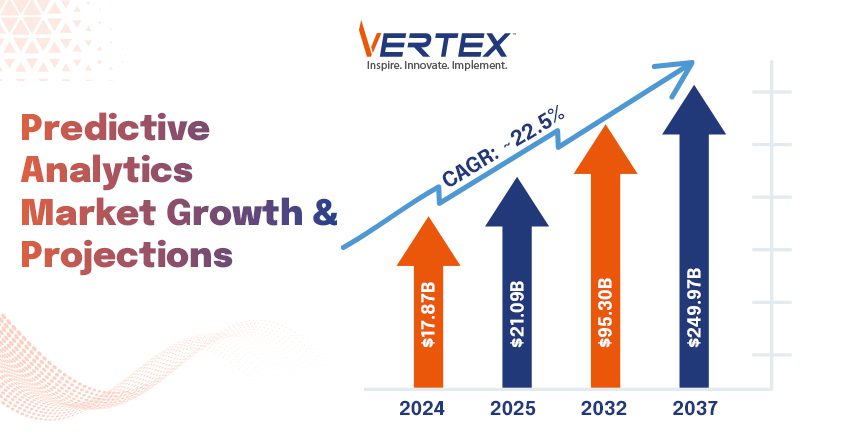
Market Growth and Projections

The predictive analytics market is experiencing robust growth. Various companies and businesses support this claim. The below-mentioned reports work as testaments.

  •  Research Nester mentioned in one of their reports that the predictive analytics market is valued at approximately USD 17.87 billion in 2024 and is projected to reach USD 249.97 billion by 2037, expanding at a compound annual growth rate (CAGR) of around 22.5% from 2025 to 2037.
  • According to Fortune Bussiness, the market will grow from USD 14.71 billion in 2023 to USD 95.30 billion by 2032, at a CAGR of 23.1% during this period.
  • By 2025, the global predictive analytics market size is expected to hit USD 21.09 billion, as reported by Precedence Research.

Benefits of Predictive Analytics

Predictive analytics offers numerous benefits across various sectors, such as marketing, finance, and healthcare.  Making it an essential tool for every sector, the use of these tools can improve a lot of factors, which are mentioned below:

  • Improved Decision-Making: Organizations can make data-driven decisions that lead to better strategic planning and resource allocation. They can also make strategies regarding new products or offers depending on consumer behaviour.
  • Enhanced Customer Experience: Businesses can use predictive analysis to make their customer service experience more personalised. This will significantly improve customer satisfaction and will attract more customers. They can achieve this by designing campaigns and customer interactions based on data and predictive insights.
  • Risk Management: Predictive analytics helps identify potential risks before they escalate into major issues, allowing organisations to mitigate losses effectively. This can help a business survive and come back stronger.
  • Optimised Operations: Businesses can streamline supply chain management and resource allocation through accurate demand forecasting. This will ensure a proper flow of supply and demand.

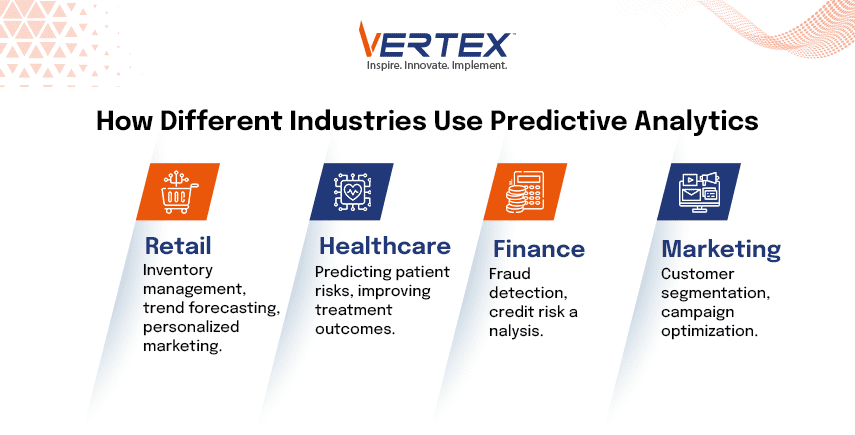
Applications Across Industries

Predictive analytics is being utilized across various industries to enhance business operations some of them are mentioned below.

Retail

In retail business, predictive analytics helps forecast trends and even customer preferences. These predictions are based on the data extracted from the previous consumers and even the present ones. With this, any retail business can keep track of inventory and create marketing campaigns. Businesses can also stock up on the most sold items and least sold items by looking over consumer purchase patterns.

Healthcare

In healthcare, predictive analytics is used to analyze the patient’s data and medical records. By doing this, we can identify at-risk patients beforehand. We can also create data charts containing the patient’s old medical history to foresee any significant outcome. According to a report by Statista, more than 92% of the healthcare leaders in Singapore are in the process of adapting predictive analytics in their healthcare organisations. China is second with an adoption rate of 79%, followed by the U.S.A. and Brazil both at 66%.

Financial Services

Financial institutions use predictive analytics for risk assessment and identifying fraud. Banks can identify anomalies that indicate fraudulent activity by analysing transaction patterns. This approach not only protects assets but also improves overall operational efficiency.

Marketing

In marketing, predictive analytics allows businesses to segregate their customers more efficiently. After studying the behavioural patterns of customers, organizations can tailor their marketing strategies to meet the specific needs of different segments. This targeted approach increases conversion rates and enhances customer loyalty. According to a report by Salesforce, more than 91% of top marketers are now fully committed to adapting to predictive analytics.

Statistical Insights into Predictive Analytics

Several key statistics support the growth trajectory of the predictive analytics market:

  • The North American market is expected to grow at the fastest rate, with an estimated value of USD 6.63 billion in 2024, rising at a CAGR of 21.52% through the forecast period. This is covered in a report by Precedence Research.
  • A significant driver for this growth is the exponential increase in data generated from various sources, such as IoT devices and digital platforms, necessitating advanced analytical tools for actionable insights. As quoted by the Grand View Research.

Challenges in Implementing Predictive Analytics

Despite its advantages and diverse use cases, many companies and businesses have a hard time implementing this to their use. We have identified some of these problems for you.

Data Privacy Concerns

The number one issue companies have with such software is their privacy, many businesses do not feel comfortable sharing all the data with such tools. This is also backed by the increasing scrutiny on data privacy regulations, such as GDPR; organisations have a tough time navigating their way through such conditions while leveraging customer data insights.

Integration with Existing Systems

Integrating predictive analytics tools with legacy systems can be complex as the old systems are not optimised to run such advanced software. These software are running on LLM and ML and these require a system that is boosted with the latest hardware.

Skill Gaps

There is a notable shortage of skilled professionals who can effectively analyze data and derive actionable insights from predictive models. We need professionals who are trained in AI interfaces and using LLM-based software.

Future Trends in Predictive Analytics

As we look ahead, several trends are shaping the future of predictive analytics:

  1. AI Integration: The integration of artificial intelligence (AI) will enhance the accuracy of predictive models by enabling more sophisticated and more complex analyses of large datasets.
  2. Real-Time Analytics: The demand for real-time insights will be greater, and this will make service-based businesses adopt predictive analytics. Through this, they will be able to speed up the process and deliver results.
  3. Cloud-Based Solutions: Cloud computing will help deploy predictive analytics solutions across various business functions.
  4. Automated Predictive Models: Advancements in automation will streamline the creation of predictive models, making it easier for organizations to implement these tools without extensive manual intervention.

Conclusion

Predictive analytics is a powerful tool for anticipating customer needs and driving business growth across various sectors. In this read, we understood the

implementation of predictive analytics in different organisations. Predictive analytics will help shape the business’s growth and make the process more streamlined. You should also adapt these tools to your business or organisation for better results.

Insights and Analytics in Azure DevOps: Making Data-Driven Decisions

Modern software development is increasingly complex, involving multiple teams, pipelines, and deliverables, often under tight deadlines. Companies frequently struggle with:

  • Lack of visibility into project health and performance.
  • Inefficient resource allocation due to incomplete or outdated data.
  • Missed deadlines stemming from unforeseen bottlenecks in workflows.

To tackle these challenges, organizations need clear, actionable insights—insights that turn complex data into meaningful decisions. That’s where Azure DevOps steps in. With its comprehensive and integrated platform, Azure DevOps simplifies the process, empowering teams to make smarter, data-driven decisions at every stage of the software delivery lifecycle.

This article dives into the depth of Insights and Analytics in Azure DevOps, exploring how to utilize its capabilities to optimize workflows, improve performance, and meet business goals.

Why Analytics Matter in Azure DevOps

Azure DevOps provides an environment where teams collaborate on code, manage work items, and deploy applications. However, without actionable insights, teams often operate in silos, with minimal visibility into metrics like:

  • Work item completion rates.
  • Pipeline efficiency and bottlenecks.
  • Test coverage and failure rates.
  • Code quality trends over time.

Analytics transform raw data from these processes into meaningful visualizations and metrics. These insights allow stakeholders to monitor progress, identify risks, and take proactive measures to ensure project success.
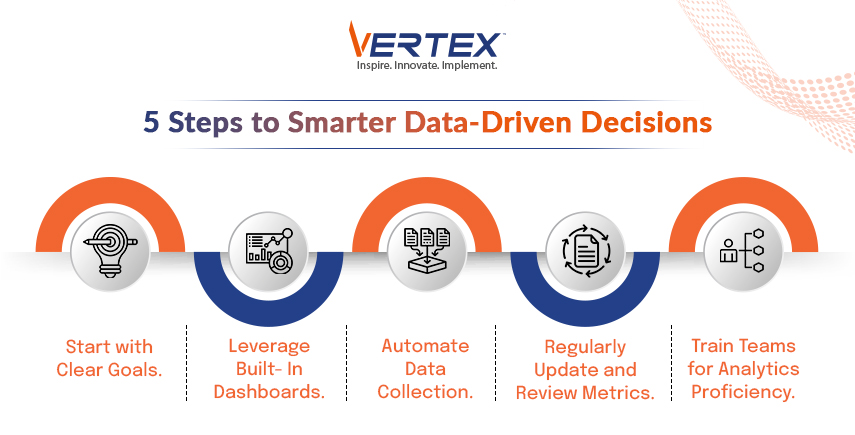
Key Analytical Features in Azure DevOps

Azure DevOps offers several tools and features that provide analytics and reporting capabilities.

  1. Azure DevOps Analytics Service
    The Azure DevOps Analytics Service is the backbone for insights in Azure DevOps. Built for scalability and performance, it aggregates data from various sources within Azure DevOps and enables fast querying for reports and dashboards.Core features of the Analytics Service include:

    • Pre-aggregated Metrics: Reduces query time by pre-processing key metrics like deployment frequency, lead time, and mean time to recover (MTTR).
    • Integration with Power BI: Enables advanced data visualization and custom reporting.
    • Custom Query Support: Allows users to define and analyze metrics specific to their project needs.
  2. Built-In Dashboards
    Azure DevOps offers out-of-the-box dashboards that provide real-time insights into various aspects of your projects. These dashboards include widgets for:

    • Pipeline Health: Displays build success/failure rates, average duration, and pipeline utilization.
    • Work Item Progress: Tracks sprint velocity, backlog health, and burndown rates.
    • Code Quality: Highlights code coverage trends, technical debt, and pull request activity.

    These dashboards can be tailored to suit individual roles, ensuring developers, project managers, and leadership each get the insights they need.

  3. Work Item Insights
    Work Item Analytics focus on tracking tasks, bugs, and features. Key metrics include:

    • Lead Time: Time taken for a work item to move from creation to completion.
    • Cycle Time: Time taken for a work item to move between two workflow stages, such as “In Progress” to “Done.”
    • Blocked Work Items: Identifies bottlenecks that may hinder delivery.

Advanced Analytics with Power BI

Azure DevOps Analytics integrates seamlessly with Power BI, allowing teams to create custom, interactive reports. This capability is essential for organizations needing detailed, cross-project insights or reporting for leadership.

Setting Up Power BI Integration

  1. Enable the Analytics Service in your Azure DevOps organization.
  2. Use the Power BI Data Connector to link Azure DevOps data to Power BI.
  3. Build custom queries in Power BI using the Analytics Service as the data source.

Sample Use Cases for Power BI in Azure DevOps

  • Team Productivity: Visualize trends in sprint velocity to assess whether teams are meeting their commitments.
  • Delivery Timelines: Track lead time and cycle time metrics to evaluate delivery efficiency.
  • Quality Trends: Correlate test pass/fail rates with defect rates to understand the impact of code changes on product stability.

Making Data-Driven Decisions in Azure DevOps

Analytics in Azure DevOps empower teams to make informed decisions at various stages of the software delivery lifecycle. Below are some examples of how teams can use these insights effectively.

  1. Optimizing Pipelines
    • Bottleneck Identification: Use pipeline metrics to find stages with high failure rates or long execution times.
    • Parallelization Opportunities: Analyze build and release timelines to identify areas where tasks can run in parallel, reducing overall cycle time.
    • Testing Strategy Evaluation: Monitor test pass rates and identify flaky or redundant tests that waste pipeline resources.
  2. Improving Code Quality
    • Technical Debt Tracking: Monitor trends in static code analysis results to prioritize refactoring efforts.
    • Pull Request Insights: Use analytics to measure code review time and ensure critical changes receive adequate attention.
    • Bug Correlation: Analyze defect density and associate it with specific modules or teams to identify areas needing improvement.
  3. Managing Team Workloads

    • Capacity Planning: Analyze sprint velocity and workload distribution to ensure teams are neither overburdened nor underutilized.
    • Blocked Work Items: Regularly review blocked tasks to mitigate risks of delay.
    • Cross-Team Dependencies: Use dependency tracking to coordinate between teams and avoid conflicting priorities.
  4. Monitoring Deployment Health

    • Deployment Frequency: Evaluate whether frequent deployments align with business goals, such as faster time-to-market.
    • Failure Rates: Track deployment success rates and correlate failures with specific pipeline changes.
    • MTTR (Mean Time to Recover): Use incident analytics to understand how quickly teams can resolve deployment issues.

Best Practices for Implementing Insights and Analytics in Azure DevOps

  1. Start with Clear Goals
    Define what metrics are most critical to your organization. For instance, a company focused on rapid innovation may prioritize lead time and deployment frequency, while another may emphasize code quality.
  2. Use Pre-Built Dashboards First
    Leverage Azure DevOps’ built-in dashboards to quickly gain initial insights. These are designed to cover the most commonly needed metrics.
  3. Automate Data Collection
    Enable the Analytics Service and integrate Power BI to ensure all metrics are up-to-date without manual intervention.
  4. Iterate on Metrics
    Regularly review your analytics setup to ensure metrics remain relevant. Add, remove, or adjust metrics as project priorities evolve.
  5. Train Your Teams
    Ensure team members understand how to interpret dashboards and use analytics to drive decisions. Provide training on tools like Power BI for more advanced users.

Challenges and How to Overcome Them

Despite its robust capabilities, using analytics in Azure DevOps can present some challenges:

  • Data Overload: Too many metrics can overwhelm teams. Focus on a handful of actionable KPIs.
  • Siloed Reporting: Ensure all teams use the same data sources and definitions to avoid discrepancies in reports.
  • Custom Query Complexity: For advanced reports, building custom queries in Power BI can be complex. Consider leveraging templates or consulting experts.

Empower Your Azure DevOps Strategy with Vertex

At Vertex Consulting Services, we’re passionate about helping organizations like yours harness the full power of Azure DevOps analytics. Our solutions are designed with your success in mind, focusing on what matters most:

  • Custom Dashboards Tailored to You: Get insights that truly align with your goals, helping you make smarter, faster decisions.
  • Power BI Integration Made Simple: Turn your data into clear, actionable visualizations that keep your teams and stakeholders on the same page.
  • Expert Support Every Step of the Way: From best practices to advanced analytics, we make sure you’re set up for long-term success.

When you partner with Vertex, you’re not just getting a service provider—you’re getting a dedicated ally to simplify the complexities of Azure DevOps. We’ll help you uncover bottlenecks, improve workflows, enhance code quality, and consistently hit your deadlines.

Conclusion

Azure DevOps’ Insights and Analytics features are game-changers for software development teams, providing the tools you need to make smarter, data-driven decisions. With built-in dashboards, the Analytics Service, and Power BI integration, you can streamline pipelines, boost code quality, and empower your teams to work more efficiently.

When done right, these insights help align your development processes with your big-picture goals, ensuring your organization delivers high-quality software on time and within budget.

Let’s work together to take your Azure DevOps strategy to the next level. Visit Vertex Consulting Services today and see how we can help you achieve smarter, faster, and more reliable results.

loader
Vertex Computer Systems is Hiring!Join the Team »
+